




Recently I was reading an article by sex educator Emily Nagoski on the concept of desire. She disputed the idea that desire was an essential element in a long-term relationship. She discussed the idea of creating specific moments for pleasure instead. Pleasure connects – replacing desire with pleasure offers the opportunity to avoid relationship ruptures simply through enjoying pleasure together rather than waiting – or pushing – for the often elusive feelings of desire.
This idea dovetails into my current focus in professional development – on how ‘broken’ relationships ie relationship ruptures can be repaired to be better than ever. If you have seen me regarding relationships you will likely have seen the us/you/me diagram I share about the journey from early lust-ness to a healthy inter-dependent relationship. A journey that can be challenging for those of us with old wounds.
Ok – for all of us. 😉
 I have long been interested in this topic (having had many interesting learnings on relationships!) and am currently enjoying a training series on the concept of ‘rupture and repair’ in relationships. Rupture is the circumstance that breaks the connection in a relationship, repair is the repair of that rupture which results in a stronger and better relationship.
This training is based on Attachment Theory. In a nutshell, this is the development process where we (hopefully) learn that our caregivers are safe, reliable and responsive. It is when we learn to self-soothe when we are distressed, necessary to build the resilience we need to navigate the challenges of life.
The training often refers to some of the original research which (very loosely!) looked at 3 styles of caregivers. The first group of caregivers were unable to connect with or respond to their infant’s needs. This early experience can translate into an isolated and self-sufficient life where it’s difficult to allow vulnerability. In a relationship, it can mean that when relationship ruptures happen (and this will happen in any relationship) the tendency is to withdraw and there is little resilience to repair.
In the second style of caregiving, needs were responded to immediately, almost before the infant had the concept of need formed. This group developed more resilience than the first group but still had difficulties learning to self-soothe. In a relationship, this can translate into needing constant attention from their partner with any withdrawal or gap in communication (let alone rupture) feeling like the beginning of the end.
The final and interestingly the most resilient group had caregivers who lovingly more or less responded more or less well more or less of the time. This resulted in the ability to self-soothe knowing that they are loved and everything will be OK in the end (the crux of the idea of a ‘good enough’ caregiver.) In a relationship experiencing a rupture, they are most likely to listen and respond to their partner honestly and effectively.
Few of us have only one style of attachment. For example, we may have had a very different attachment to our mother than to our father. Or our primary attachment may have been outside the family. All of this will impact us at times in our relationships and may create various reactive triggers that can result in behaviour we later regret.
 Relationship ruptures are unavoidable. Transitions such as a new baby, a change of lifestyle or a job can challenge a relationship as much as illness, financial pressures, infidelity or addiction ever will. If we are aware of our attachment style we can start to recognise what or when we are triggered. We can then deal with our internal world before we do or say something that we either cannot take back – or that we retract when we calm down (therefore negating whatever originally drove the words or actions – quite possibly something that needs a conversation and over time will create a significant rift.)
There is sooooo much to say on this topic. But having a conversation with our partner about any tendencies we have to withdraw or need affirmation and connection when we are triggered will start to build understanding and bridges that we may need in the future. Of course, it is up to us to do our own work but mutual love, respect and trust will take us a long way to healing old wounds.
And coming back to the concept of pleasure and desire. Spending pleasurable time together in any form will help foster the bond which can help build the resilience to navigate the trickier times when relationship ruptures are rocking the boat.
We need to let go of the idea of fairy tale romances, soul mates who will give us everything we desire, partners who can read our minds and the idea of desire as a foundation for long-term relationships. Instead, we can identify already existing moments of pleasure and recognise them as significant. And we can start to create -and commit to – new pockets of time for pleasure. That may be date night – but it also could be a trip together to the farmers market on Sunday stopping for a cup of coffee on the grass as you watch the kids play.
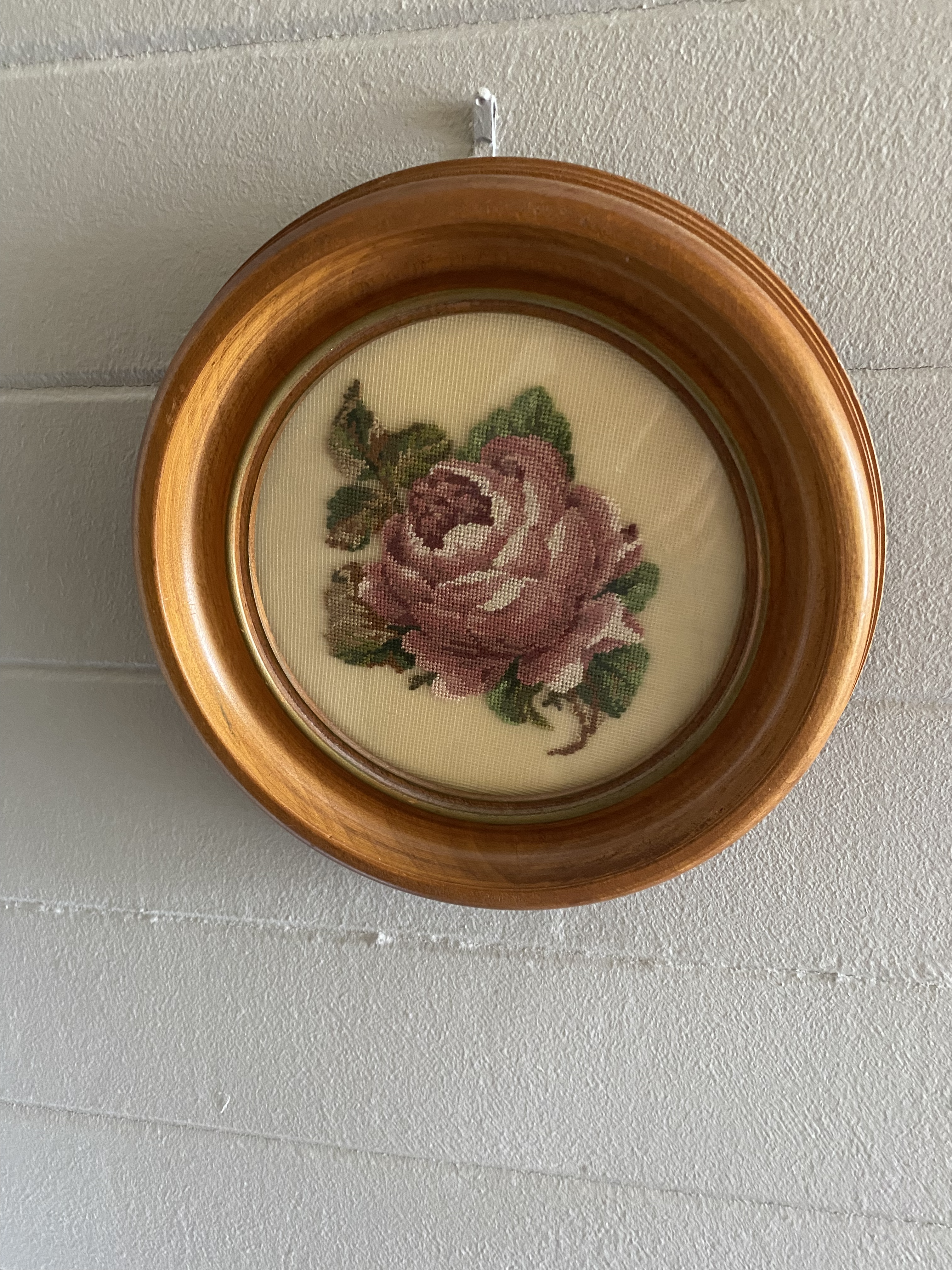
 A box of memories from my mother’s estate reminded me of one of my parents’ sacred times. It contained one of the petite-points Mum made. Every night (unless Mum was on evening shift or out) they would sit down with a cup of tea to the 9 o’clock movie. “Carol! The movie’s on!” They would sit in their respective chairs. Dad would have a book ready for the commercials and Mum would have her petite-point or rug-making or whatever was her current creative outlet to pass the time. Dad lived for TV – Mum hated it – but they both valued that time together in a ritual they followed till Dad died.
Their other connection time was a cup of tea (you can tell they were English!) together in their bedroom when they got home at night. The door was firmly shut and no matter how late it was, dinner had to wait. Woe betide any child who interrupted! Maybe it was de-briefing, maybe it was keeping the relationship alive (certainly there were 5 of us in short order) but whatever it was, that 20 minutes was non-negotiable.
I believe these small rituals in their very busy lives were the moments of pleasure that helped them stay connected through 5 children and some very big challenges. I would not say it was a relationship to model on – let’s just say it was loud! But despite being unique and rather eccentric beings they found their way through 49 years together when Dad died. And he was still the only one for Mum when she passed 19 years later.
These days, with our phones and computers and individual lives we lose those types of moments that relied on simpler times. We have to consciously create them and recognise how important they are in the fabric of our lives and just book ’em into the diary!
 Incidentally, I discovered that there is a formula that long-lasting relationships have in common. It is an average of 5 positive interactions to each negative. So it is rather nice to know that a quiet cuppa together, a quick hug in passing, a kiss before sleep, a ‘thanks love’ or a quickly texted emoji (ie all those things that can be forgotten in the busy-ness of life) are important moments that will, over time, help keep the connection alive. A connection that at some future point may be key in helping navigate a tough patch.
And when we are going through a tough patch, remembering this formula can help us to consciously add in a few more of those simple connection points. Of course, you will need to deal with the underlying issue(!!!) and have those difficult conversations – but following this formula may just tip the scales towards the healing and growth that relationship ruptures and repairs offer.
_____________________________
******** This was written with the intention of helping you to live your best life, I would love to hear your thoughts on this, And if you think someone else would enjoy it please feel free to share it around. And check out my free stuff on my membership site here! *********
********* if you want to know more about how I can help you Create The Life You Want To Live please do get in touch! ********
Copyright 2024 Gay Landeta, Create The Life You Want To Live. All rights reserved.
